
“In the twentieth century, the body has become the central personal project of American girls ... Today, many young girls worry about the contours of their bodies -- especially shape, size, and muscle tone -- because they believe that the body is the ultimate expression of the self ... The body is a consuming project for contemporary girls because it provides an important means of self-definition, a way to visibly announce who you are to the world” (Brumberg, 97).
Feeding off a nation of insecure females, the magazine industry offers answers on every “Self Help” cover. The February 2010 issue of “Shape” Magazine claims it will help you “Shape Your Life.” The cover advertises the ability to “Beat AB Flab” in two minutes,
 “Stop Winter Weight Gain” in 28 days, and help figure out why you are so “cranky”. The magazine displays three or four ways to help women shape their body towards one that looks just like Katherine McPhee,
this issues’ cover woman. Standing thigh-deep in clear blue water, Katherine is accompanied by her quote, “I’m in the best shape ever!” which stands above the claim that following in her footsteps will get you the same results. Instead of promoting a healthy image of the natural female body, claims like these make me wonder if this magazine should be considered “Self-Help” or just another tool to fuel “women’s obsession with their appearance” (Valdes, 28). If women are so concerned with shaping their bodies to resemble Katharine McPhee’s, how will the feminist movement ever gain enough momentum to make a large impact?
With so many messages that support the “Lets tone up!” mentality, positive messages about the female identity get lost in the mix. Squished under to the supermodel’s bikini-clad body and the miracle two minute workout that eliminates ab flab is the smallest subtitle: “How I learned to love my body: The must-read for EVERY woman.” Including this last message is a genius advertising tool. First fuel the mentality that every woman has imperfections in her body that need to be fixed and start her down the path to fixing it.

But, more importantly, make sure to also provide a light at the end of the tunnel--at least ONE woman has learned to love their body, maybe you could be next! By Shape Magazine’s focusing on ways to mold the female body into a Barbie-like image, closer to the “ideal” pre-pubescent, skinny female, it is difficult for readers to walk away feeling satisfied. After all, no one will ever look like Barbie. “If a woman of Barbie’s proportions existed, she wouldn’t be able to walk, breathe or digest food” (Valdes, 26). Yet, magazines like Shape and celebrities like Katharine McPhee make us want to chase after that perfect body. Even though, “none of us… will ever reach our real goals playing by the rules of that industry, no matter how many inches we shed” (32). At the end of the day, reading through the magazine points out how different each reader's body type is from the ideal and by doing so, rubs how far she needs to go to achieve the ideal in her face. Instead of promoting healthy images of a female body, the cover of Shape puts the “ideal” woman on a pedestal.
Shape Magazine is filled with messages that perpetuate female gender stereotypes and unconsciously promote ideas that females are diseased, disordered, unclean, and simply imperfect. With a magazine like this, it is no wonder that society has trouble moving away from negative messages about the female population. Either you can accept your body in its natural state, or devote yourself to a lifetime of work in pursuit of an ideal you most likely won't achieve. Confused by whether or not dedicating your life is an empowering movement or not, fitness causes yet another rift in the feminist movement. It is no longer clear who defines beauty, each individual, or however magazines like Shape decide to represent society’s view.
Some feminists, like Alisa Valdes temporarily, believe women in the gym empower the entire gender because women have closed in on the male’s territory (29).
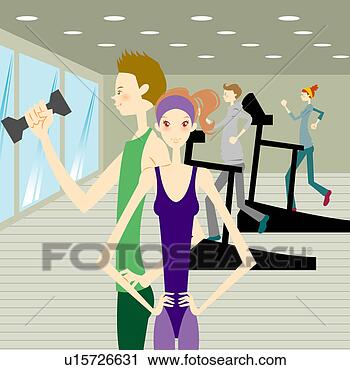 In addition, the gym provides a freeing environment where women can “let go of inhibitions and trust their bodies to move big” (Valdes, 30). Considering this point of view, working out and incorporating techniques that Shape advertises marks a huge improvement for the feminist movement. In this way, females are breaking down the gender walls in their kickboxing classes every day. As a result, some women find confidence in being in “the best shape ever!” like Katharine McPhee. In addition, striving for improving the female body seems beneficial to the feminist movement. If the female body is as diseased as many unconsciously tend to believe, working on it to get it in better physical shape seems like a good idea. In addition to gaining power by joining the “attractive” population, getting in shape has many health benefits. Perhaps the endorphins released after working out can combat the hormonal mood swings and emotions that plague all females. If that doesn’t work, Shape suggests turning to page 34 to find, “Three secrets to a happier life.” Working to break down gender walls and improve the stereotypical image of a woman, helps the feminist movement in many ways. Breaking down gender walls while actively working towards a better physique, seem like a win-win situation for these feminists.
However, there is a line between working on physical appearances as the result of an individual belief and working towards what society deems “attractive” and “healthy”. What motivated us to break down the gender walls in the first place? It seems that the female population needed to make some sacrifices in order to make any progress. While flipping through the pages of Shape to find the answers to happiness in life, be prepared to face conflicting messages. Next to the “empowering” messages about how to “tone up”, there are also suggestions to help you deal with your mood swings and “female problems.” Shape offers practical solutions to overcome that hard time of the month. For example to overcome dirtiness, L’oreal will help you “Go beyond clean. Go 360 degrees clean” and Olay will help you accomplish “A clean so pristine even your towel will notice.” More specifically, Kotex invites you to the “undieground party” that is panty approved to prevent leaks
 while Yaz says it can control symptoms of PMDD that include irritability, anger, feeling anxious, fatigue, markedly depressed moods, headaches, bloating, muscle aches and changes in appetite. Including advertisements like these confirm many of the negative stereotypes of female’s that are seen as abnormalities. L’oreal, Olay and Kotex suggest females are unclean, while Yaz’s two page spread in addition to the Abilify’s treatment of depression suggests that females have diseases that require serious medications to resolve. Symbolizing the feminist debate of whether to support exercise or not, the advertisements that fit side by side next to “empowering” editorials contradict positive messages.
 Although I respect what Shape is trying to do, give women the tools they need to improve their bodies, I wonder if the existence of magazines like Shape go too far altogether. Simply by existing, and picking celebrities and models to pose for the cover of their magazines, the magazine industry is defining beauty. Next, as a result of these images, females start workings towards looking like people like Katharine McPhee, instead of defining their own images of beauty. Instead of promoting one definition of beautiful, I believe the feminist movement has a chance to unite here and start teaching other women that they should define their own version of beauty. Instead of feeding a nation of self-conscious girls who are overly focused on their body image, we should start feeding a nation of confident girls, ready to leave their body image behind and start tackling more important issues.

No comments:
Post a Comment